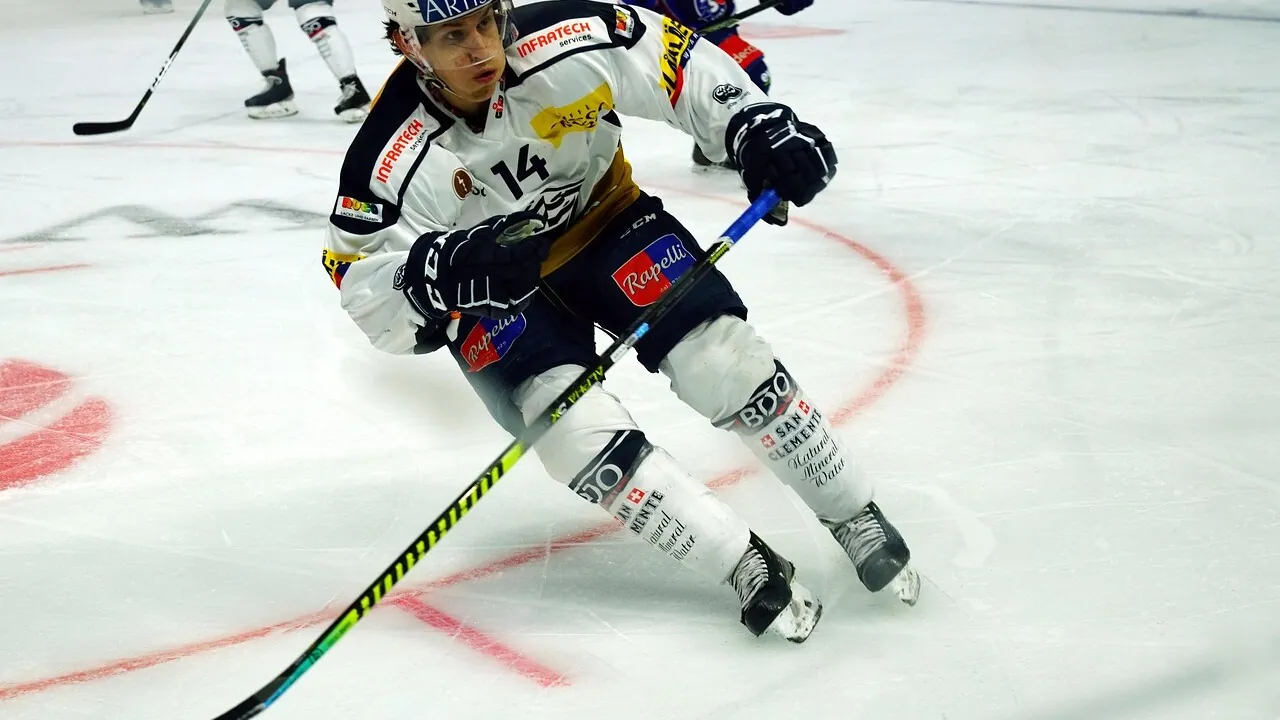
How Many Periods Are There in a Hockey Game? Complete Guide
Overview
An ice hockey game at the professional, international, and collegiate level is composed of three periods of 20 minutes each, for a total regulation playing time of 60 minutes. This structure is uniform across the National Hockey League (NHL), the International Ice Hockey Federation (IIHF), the Olympic Games, the NCAA, and the Professional Women's Hockey League (PWHL). The clock stops for every whistle, meaning the actual elapsed time from puck drop to final horn is considerably longer. This guide provides a comprehensive breakdown of period structures across all major hockey formats, including overtime rules, historical context, and the distinct differences found in field hockey and other variants.
The quick answer: three 20-minute periods
The standard regulation length for an ice hockey game is 60 minutes of stop-time play, divided into three periods of 20 minutes each. The game clock runs only when the puck is in play, stopping for offsides, icings, penalties, goals, and timeouts. Between the first and second periods, and again between the second and third, there is an intermission. In the NHL, these intermissions are 17 minutes long, as specified in the league's Operations Manual. The total real-time duration of a game, including intermissions and stoppages, typically ranges from 2 hours and 20 minutes to 2 hours and 40 minutes for a regulation contest. The home team chooses which goal to defend at the start of the game, with teams switching ends after each period.
NHL ice hockey: regulation, overtime and shootouts
NHL Rule 5.1 states that a game shall be composed of three 20-minute periods of actual play. The 17-minute intermissions are standardised across the league, allowing for ice resurfacing, television advertising, and team preparation. If the score is tied after 60 minutes of regulation, the NHL employs a distinct overtime system depending on the context. During the regular season, a five-minute, sudden-death overtime period is played with three skaters per side (3-on-3), plus goaltenders. If no goal is scored, the game proceeds to a shootout, governed by Rule 84. Each team selects three shooters; if the score remains tied after those attempts, the shootout continues in a sudden-death format with single shooters from each team. No player may shoot a second time until all eligible teammates have taken a shot.
NHL playoff hockey operates under a different set of overtime rules. There is no shootout. Instead, if the game is tied after regulation, the teams play full 20-minute periods of 5-on-5 sudden-death hockey. A 10-minute intermission is held between each overtime period. This format continues indefinitely until a goal is scored, making playoff overtime a test of endurance and strategy. The longest NHL playoff game in history, between the Detroit Red Wings and Montreal Maroons in 1936, lasted 176 minutes and 30 seconds of playing time, requiring six full overtime periods.
IIHF international and Olympic rules
The International Ice Hockey Federation (IIHF) also mandates three 20-minute periods for all its sanctioned events, including the World Championships and the Olympic Winter Games. The IIHF Official Rule Book (2022–2026), Rule 15, specifies that a game is played in three periods of twenty minutes each with two intermissions of fifteen minutes. The overtime format for IIHF tournaments varies by stage. In group-stage games, a five-minute, 3-on-3 sudden-death overtime is played, followed by a shootout if necessary. For elimination games, the format often shifts to a 10-minute or 20-minute 5-on-5 sudden-death overtime period, depending on the specific tournament regulations. The Olympic hockey tournament, governed by the IIHF in cooperation with the International Olympic Committee, follows these same structural rules. For the Milano-Cortina 2026 Games, the format is expected to mirror recent Olympics: 3-on-3 overtime in group play and longer 5-on-5 periods in the medal rounds.
NCAA, junior and women's professional leagues
College hockey in the United States, under the NCAA Playing Rules and Interpretations for Ice Hockey, uses three 20-minute periods. Regular-season overtime is a single five-minute period, with the format (5-on-5, 4-on-4, or 3-on-3) determined by the individual conference. Many conferences now use 3-on-3 overtime followed by a shootout to award a third point in the standings. In the NCAA tournament, particularly the Frozen Four, overtime consists of full 20-minute 5-on-5 sudden-death periods, repeated until a goal is scored. The Canadian Hockey League (CHL), which oversees the Ontario Hockey League (OHL), Western Hockey League (WHL), and Quebec Maritimes Junior Hockey League (QMJHL), also uses three 20-minute periods. Their regular-season overtime is five minutes of 3-on-3, followed by a shootout, while playoff overtime uses 20-minute 5-on-5 periods. The Professional Women's Hockey League (PWHL), which launched in 2023-24, adopted the same three-period structure. Its regular season features a five-minute 3-on-3 overtime and a shootout, while the playoffs use 20-minute 5-on-5 sudden-death periods.
Anatomy of a hockey game: the period-by-period breakdown
Each period begins with a face-off at centre ice. The puck is dropped by the referee, and the two centres compete for possession. Line changes occur on the fly, meaning players can substitute during live play, a unique feature of hockey that demands constant awareness and conditioning. The flow of a period is punctuated by whistles for offside, icing, penalties, and goals. The Zamboni ice resurfacing machine operates during the intermissions, shaving the ice surface and laying down a fresh layer of hot water that freezes into a smooth sheet. This process is critical for maintaining speed and puck movement. The decision for the home team to choose which goal to defend at the start of the game is a strategic one, often influenced by the location of the team bench and the tendency of the net to be moved in the final minutes of a period.
Field hockey is different: four 15-minute quarters
Field hockey, governed by the International Hockey Federation (FIH), operates on a fundamentally different period structure. Prior to 2014, elite field hockey matches were played in two 35-minute halves. A significant rule change, implemented for the 2014-2015 season, moved the sport to four 15-minute quarters, for a total of 60 minutes of playing time. This change was driven by a desire to increase the pace of the game, allow for more frequent tactical breaks, and improve the product for television broadcast. The intervals between quarters are structured as follows: a two-minute break between the first and second quarters, a longer half-time interval of ten minutes between the second and third quarters, and another two-minute break between the third and fourth quarters. In many top-level FIH tournaments, tied matches proceed directly to a shoot-out competition, eliminating the traditional overtime period.
Roller hockey, ball hockey and other variants
The period structure for other hockey variants is not uniform. Inline hockey, as governed by the IIHF for its now-suspended World Championships, traditionally used two 20-minute periods. However, many national and amateur inline leagues have adopted four 12-minute periods to increase game flow and scoring opportunities. Roller hockey, under World Skate rules, typically uses two 25-minute halves for a total of 50 minutes. Organised ball hockey, under the International Street and Ball Hockey Federation (ISBHF), commonly uses three 15-minute periods for its World Championships, though amateur leagues often use three 20-minute periods or two 20-minute halves. Sledge hockey, the Paralympic version of ice hockey, uses three 15-minute periods, a shorter format designed to accommodate the physical demands of the sport.
Youth and recreational hockey
Youth hockey leagues, such as those under USA Hockey, adapt the period structure based on the age and skill level of the players. The standard format is three stop-time periods, but the length of each period varies significantly. For the youngest age groups, such as 8-and-under (8U) Mini-Mite and Mite divisions, games are often played cross-ice on a smaller surface with periods of 12 to 15 minutes. As players progress through the age divisions (10U, 12U, 14U), period lengths increase to 15 minutes, and eventually to 17 or 20 minutes at the 18U and Junior levels. Recreational adult leagues often use three 15-minute or 20-minute periods of running time, where the clock does not stop for every whistle, to ensure games fit within a strict time slot on the ice.
Why hockey has three periods: a 1910 ice-resurfacing solution
The shift from two halves to three periods is a specific historical development rooted in the practicalities of early 20th-century ice hockey. Before 1910, the sport was typically played in two 30-minute halves, a format inherited from other British field sports. The National Hockey Association (NHA), the direct predecessor of the NHL, introduced the three-period structure for the 1910-1911 season. The primary motivation was ice quality. Over a 30-minute half, the ice surface would become heavily rutted, chipped, and covered in snow, significantly slowing the game and increasing the risk of injury. By dividing the game into three 20-minute periods, the NHA allowed for a more frequent maintenance break. Teams could scrape and flood the ice between periods, restoring a high-quality playing surface. This innovation improved the speed and skill of the game and became a permanent standard when the NHL was founded in 1917.
How long is a hockey game in real time?
While a regulation hockey game has 60 minutes of playing time, the total elapsed time from start to finish is considerably longer. The two intermissions account for 34 minutes in the NHL (17 minutes each). Added to this are all the stoppages in play: offsides, icings, penalties, goals, television timeouts, and the time it takes to conduct face-offs and line changes. An NHL game typically has between 50 and 70 stoppages. A standard NHL telecast is scheduled for a 2-hour and 30-minute window. A regulation game that ends in a tie will extend beyond that window due to the five-minute overtime and potential shootout. Playoff games, with their multiple overtime periods, can extend for four, five, or even six hours of real time. The longest NHL game in history, a 1936 playoff contest, lasted over six hours of real time.
Verdict
The three-period, 20-minute format is the bedrock of modern ice hockey, a structure born from a practical solution to ice maintenance over a century ago. From the NHL to the Olympics to junior leagues, this standard provides a consistent framework for the sport. The variations in overtime rules—from the 3-on-3 sprint of the regular season to the marathon 5-on-5 periods of the playoffs—add distinct layers of strategy and drama. Understanding these structures is essential for any fan or bettor, as the rules governing the end of a game are as critical as those that govern its beginning.
Gamblingpedia UK Editorial
Independent UK casino reviews and gambling guides.