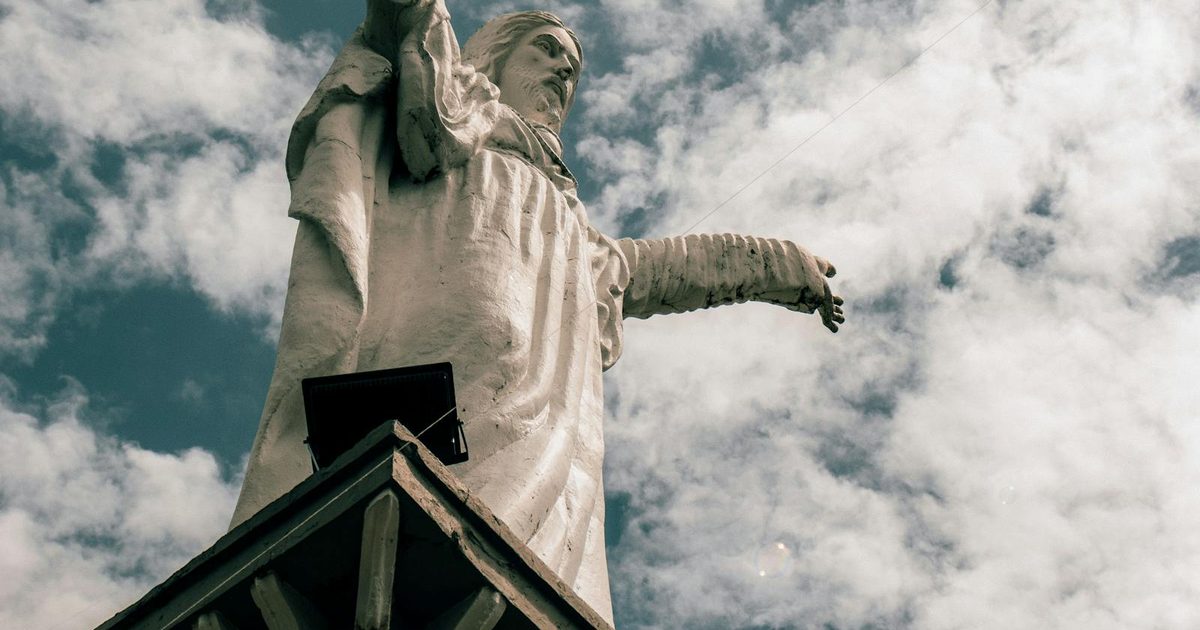
Ascension Day 2025, observed on Thursday, May 29, is one of the most significant yet often overlooked feasts in the Christian liturgical calendar. This day commemorates the bodily ascension of Jesus Christ into Heaven, an event described in the Acts of the Apostles (1:9-11) as occurring 40 days after His resurrection from the dead. While its date shifts annually due to its dependence on Easter, the core theological meaning remains constant: Christ's exaltation to the right hand of God the Father, marking the completion of His earthly ministry and the beginning of His heavenly reign. This article provides a comprehensive, authoritative guide to Ascension Day 2025, covering its date, historical origins, global traditions, and modern observance.
When is Ascension Day 2025? The Exact Date and Why It Moves
Ascension Day is a movable feast, always falling on a Thursday. In 2025, it is observed on Thursday, May 29. This date is calculated by counting exactly 40 days after Easter Sunday, which in 2025 falls on April 20. The 40-day period is directly rooted in the biblical account of Acts 1:3, which states that Jesus appeared to His apostles over a period of "forty days" after His resurrection, giving them instructions before His ascension.
The variability of the date stems from the lunar-based calculation of Easter. Easter is observed on the first Sunday after the first full moon following the vernal equinox. Consequently, both Easter and Ascension Day shift between March and May each year. For example, Ascension Day 2026 will fall on Thursday, May 14 (or Sunday, May 17 in many U.S. dioceses). This feast is also linked to Pentecost, which occurs 10 days after Ascension—on Sunday, June 8, 2025—commemorating the descent of the Holy Spirit upon the apostles.
Biblical and Theological Significance: The Event on the Mount of Olives
The only biblical account of the Ascension is found in Acts 1:9-11, where Luke writes: "He was taken up before their very eyes, and a cloud hid him from their sight." The event took place at the Mount of Olives, near Bethany, about a Sabbath day's journey from Jerusalem (Acts 1:12). Theologically, the Ascension signifies several key doctrines:
- Christ's Heavenly Reign and Intercession: Jesus is exalted to the right hand of God the Father, where He reigns as King and intercedes for believers (Romans 8:34). This establishes His authority over all creation and His ongoing priestly work.
- The Promise of Return: The angels who appeared to the apostles declared, "This same Jesus, who has been taken from you into heaven, will come back in the same way you have seen him go into heaven" (Acts 1:11). This event thus reinforces the Christian hope of the Second Coming.
- Completion of the Resurrection Appearances: The 40 days of post-resurrection appearances—including appearances to Mary Magdalene, the disciples on the road to Emmaus, and Thomas—culminated in this final departure. It marks the end of Jesus' visible, bodily presence on earth and the beginning of the Church's mission.
The event is also foreshadowed in the Old Testament. Just as Moses ascended Mount Sinai after 40 days of preparation to receive the Law (Exodus 19:1-6), Christ ascends to Heaven after 40 days to inaugurate the New Covenant. This parallel underscores the continuity between the Old and New Testaments.

Historical Development: From 4th Century Feast to Medieval Traditions
While the Ascension is recorded in the New Testament, its formal observance as a liturgical feast developed over centuries. The earliest evidence of a distinct Ascension celebration dates to the 4th century, with the Church historian Eusebius referencing a feast in Jerusalem. By the 5th century, it was universally observed in both Eastern and Western Christianity, often on the 40th day after Easter.
During the medieval period, Ascension Day became deeply embedded in European folk and agricultural traditions. It was associated with Rogation Days—days of prayer and fasting for the blessing of crops—which preceded the feast. Specific customs included:
- Blessing of Herbs: In many regions, herbs and first fruits were blessed during Ascension processions, believed to have healing properties.
- Processions and Parishes: Communities would walk the boundaries of their parishes, carrying crosses and banners, to mark the land and pray for protection.
- The "Ascension Play": In some medieval towns, dramatic reenactments of the Ascension were performed, often involving a figure of Christ being lifted through a hole in the church roof.
These traditions, while less common today, highlight how the feast was not merely a theological event but a community celebration tied to the agricultural calendar.
Regional Traditions and Observance Around the World in 2025
Ascension Day 2025 will be marked with varying degrees of solemnity and festivity across the globe. In many countries, it is a public holiday. According to research, it is a legal holiday in 16 countries, including Austria (where it is called Christi Himmelfahrt), Denmark, Norway, Sweden, Finland, Germany, France, Belgium, the Netherlands, and Switzerland. In these nations, businesses, schools, and government offices close, and many people attend church services or enjoy a long weekend.
In the United States, Ascension Day is not a public holiday. However, it remains a Holy Day of Obligation in the Catholic Church, meaning Catholics are required to attend Mass. To accommodate modern schedules, most U.S. dioceses have transferred the observance to the following Sunday. For example, in 2025, the Diocese of Little Rock will celebrate the Ascension on Sunday, June 1, rather than Thursday, May 29 (source: dolr.org). Similarly, the Archdiocese of Baltimore and many others follow this practice, a trend that began in the early 2000s. This shift is designed to increase attendance, as fewer people can attend a Thursday service.
Globally, the Churches of God organization held worldwide services for approximately 7,800 congregations on May 29, 2025, emphasizing the spread of the New Covenant gospel as described in Acts 1:6-15 (source: watv.org). In Eastern Orthodox traditions, the feast is called the Feast of the Ascension and is one of the twelve Great Feasts, celebrated with a Divine Liturgy and a 10-day period of preparation.

Modern Observance: What to Do on Ascension Day 2025
For Christians, Ascension Day is a time for reflection, worship, and anticipation. Key practices include:
- Attend Mass or Worship Services: Whether on Thursday, May 29, or the transferred Sunday (June 1 in many U.S. locales), attending a service is central. Readings focus on Acts 1:1-11, the Gospel of Luke 24:50-53, and the promise of the Holy Spirit.
- Meditate on Christ's Reign: The feast invites believers to consider Jesus' current role as King and intercessor. This can be done through personal prayer, reading Psalm 47 (which celebrates God's ascension), or studying the Epistle to the Hebrews, which emphasizes Christ's high priesthood.
- Participate in Processions or Blessings: In regions where traditions persist, such as parts of Germany or Austria, communities may hold outdoor processions with crosses and banners. Some churches still bless herbs or flowers on this day.
- Prepare for Pentecost: Ascension is a bridge between Easter and Pentecost. Many churches use this time to pray for the outpouring of the Holy Spirit, which is celebrated 10 days later on June 8, 2025.
For those not attending a service, the day can be marked by reading the biblical account, singing hymns like "Hail the Day That Sees Him Rise," or simply reflecting on the hope of Christ's return.
Frequently Asked Questions About Ascension Day 2025
1. When is Ascension Day 2025?
Ascension Day 2025 is observed on Thursday, May 29, 2025. However, in many U.S. Catholic dioceses, it is transferred to the following Sunday, June 1, 2025.
2. Why is Ascension Day 40 days after Easter?
The 40-day period is directly from the Bible. In Acts 1:3, Jesus appeared to His apostles over a period of "forty days" after His resurrection, giving them instructions. The Ascension marks the end of this period.
3. Is Ascension Day a public holiday in 2025?
Yes, it is a public holiday in 16 countries, including Austria, Denmark, Germany, Norway, Sweden, and Switzerland. It is not a public holiday in the United States or the United Kingdom.
4. Is Ascension Day a Holy Day of Obligation?
Yes, in the Catholic Church, the Ascension is a Holy Day of Obligation. In the U.S., many dioceses transfer it to the following Sunday to fulfill this obligation.
5. What is the difference between Ascension Day and Pentecost?
Ascension Day commemorates Jesus' bodily ascension into heaven, 40 days after Easter. Pentecost celebrates the descent of the Holy Spirit upon the apostles, 50 days after Easter (10 days after Ascension). In 2025, Pentecost is on June 8.
6. What is the biblical basis for the Ascension?
The primary account is in Acts 1:9-11, where Jesus is taken up into a cloud. It is also referenced in Luke 24:50-53 and Mark 16:19. The angels' promise that Jesus will return "in the same way" is a key element.
7. What should I do on Ascension Day?
Christians are encouraged to attend Mass or a worship service, reflect on Christ's heavenly reign, and pray for the coming of the Holy Spirit at Pentecost. Some traditions include processions or blessing of herbs.
8. When is Ascension Day in 2026?
In 2026, the traditional Thursday date is May 14. In many U.S. dioceses that transfer to Sunday, it will be observed on Sunday, May 17, 2026.
9. Why do some U.S. dioceses celebrate on Sunday instead of Thursday?
Since the early 2000s, many U.S. dioceses (e.g., Archdiocese of Baltimore, Diocese of Little Rock) have transferred the observance to the following Sunday to allow more parishioners to attend Mass, as Thursday is a workday for most people.
10. What is the significance of the Mount of Olives?
The Ascension is said to have taken place on the Mount of Olives, near Bethany. This location is significant because it is also associated with Jesus' triumphal entry into Jerusalem and is prophesied in Zechariah 14:4 as the place where God will stand on the day of judgment.
For more information on religious observances and holidays, visit our calendar hub or explore our reviews section for related content. If you or someone you know is struggling with gambling, please see our responsible gambling page for resources.