
Under 12.5 Corners Meaning | Complete Guide
Corner betting is one of the most popular alternative markets in football, offering a way to profit from match analysis without needing to predict scorelines or results. If you have come across “Under 12.5 Corners” on a bookmaker’s coupon and want to understand exactly what it means, how the market works, and how to approach it strategically, this guide covers everything you need to know.
What Does Under 12.5 Corners Mean?
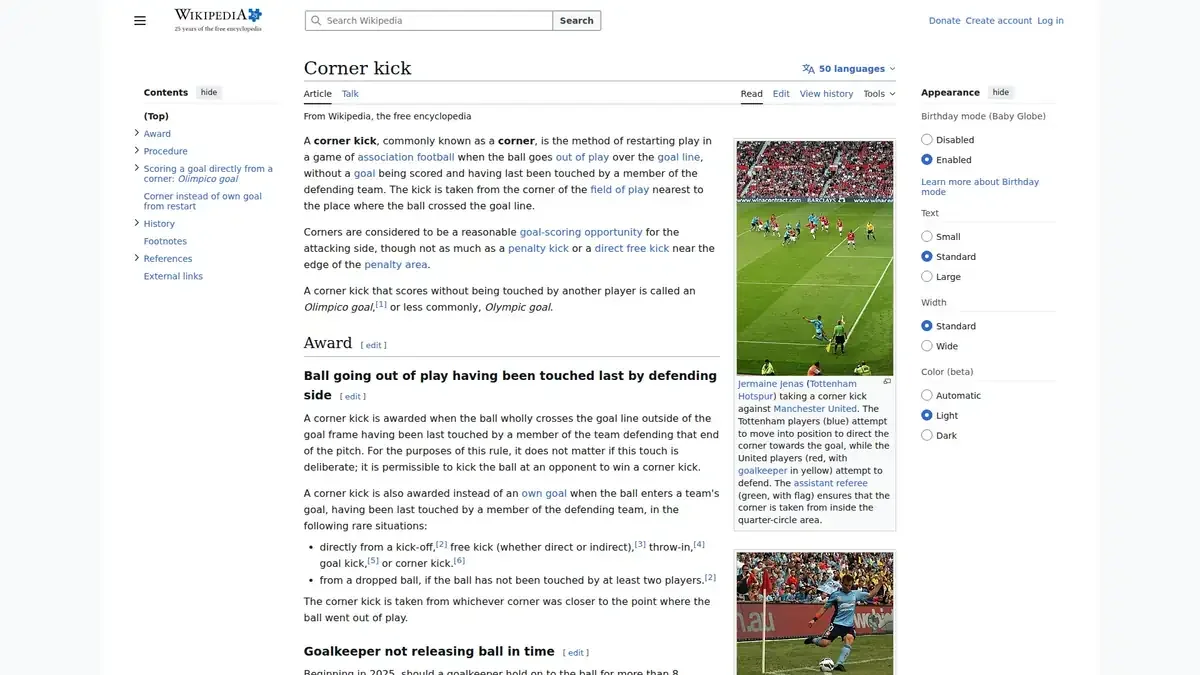
When you place a bet on Under 12.5 Corners, you are wagering that the total number of corners awarded to both teams combined in the match will be 12 or fewer. If the match finishes with 12 corners or fewer in total, your bet wins. If there are 13 or more corners, your bet loses.
The “.5” in the line exists to eliminate the possibility of a draw or push. Because a match can never produce exactly 12.5 corners, the bet always has a clear outcome: either it wins or it loses. There is no refund scenario.
Simple Example
- Match: Arsenal vs Tottenham
- Your bet: Under 12.5 Corners
- Final corner count: Arsenal 6, Tottenham 5 = 11 total
- Result: Your bet wins (11 is under 12.5)
If the corner count had been Arsenal 7, Tottenham 6 = 13 total, your bet would have lost (13 is over 12.5).
How Over/Under Corners Betting Works
The over/under corners market operates on the same principle as over/under goals, but applied to the total number of corners in a match. The bookmaker sets a line — a number ending in .5 — and you decide whether the actual total will be higher (Over) or lower (Under).
Both teams’ corners are counted together. It does not matter which side wins more corners; only the combined total determines the outcome of your bet.
Key Points
- The line applies to the full match (90 minutes plus stoppage time). Extra time and penalty shootouts are normally excluded.
- Corners that are retaken still count as one corner.
- The .5 ensures every bet settles as a win or a loss — no draws.
Common Corner Betting Lines Explained
Bookmakers offer several over/under lines for each match, with the odds adjusting based on how likely each outcome is. Below are the most common lines and what they require.
| Line | Over Wins If | Under Wins If | Typical Use |
|---|---|---|---|
| 7.5 | 8+ corners | 7 or fewer | Low-total matches, defensive games |
| 8.5 | 9+ corners | 8 or fewer | Below-average corner games |
| 9.5 | 10+ corners | 9 or fewer | Standard market for average matches |
| 10.5 | 11+ corners | 10 or fewer | Most common main line |
| 11.5 | 12+ corners | 11 or fewer | Above-average corner matches |
| 12.5 | 13+ corners | 12 or fewer | Higher threshold, safer for Under bets |
| 13.5 | 14+ corners | 13 or fewer | Corner-heavy fixtures |
The 10.5 line is the most commonly offered as the “main” line for top-league matches. Under 12.5 is a higher threshold, which means it wins more often but typically comes with shorter odds (lower payouts).
Other Corner Betting Markets
Beyond Over/Under totals, bookmakers offer several other corner-related markets:
- Corner 1X2: Bet on which team will win the most corners (1 = home, X = tie, 2 = away).
- Corner Handicap: One team is given a virtual advantage or deficit. For example, Team A -2.5 corners means they must win at least 3 more corners than their opponent.
- First Half Corners: Over/under lines applied only to the first 45 minutes. Common lines include over/under 4.5 or 5.5.
- Team Corners: Over/under for a single team’s corner count, ignoring the opposition’s total.
- Exact Corners: Predict the precise total number of corners, or a band (e.g., 10-12 corners).
- First/Last Corner: Bet on which team will take the first or last corner of the match.
Average Corners Per Match by League
Understanding how many corners a typical match produces is essential for making informed bets. Averages vary by league, season, and playing style.
| League | Average Corners Per Match |
|---|---|
| Premier League (England) | 10.5 – 11.0 |
| La Liga (Spain) | 9.5 – 10.5 |
| Bundesliga (Germany) | 10.0 – 10.5 |
| Serie A (Italy) | 10.0 – 11.0 |
| Ligue 1 (France) | 9.5 – 10.0 |
| Eredivisie (Netherlands) | 10.0 – 10.5 |
| Scottish Premiership | 9.5 – 10.5 |
With most top leagues averaging around 10-11 corners per match, the Under 12.5 line typically covers the majority of fixtures. This is why it is considered one of the safer corner betting lines — but the odds will be priced accordingly.
Strategy and Stats to Consider
Corner betting rewards research. Unlike goals, which can be influenced by individual brilliance or errors, corner counts tend to follow more predictable patterns tied to team tactics and match dynamics. Here are the key factors to analyse.
Team Playing Style
Attacking teams that play wide and deliver frequent crosses tend to generate more corners. Defensive, possession-heavy sides that play through the centre often produce fewer. Research each team’s average corners won and conceded per match.
Home vs Away Performance
Home teams typically win more corners than away teams, as they tend to have more possession and attacking intent. However, the combined total is what matters for Over/Under bets. Check whether the home team’s attacking style inflates the total or whether their dominance actually suppresses the away team’s corner count.
Head-to-Head History
Some fixtures consistently produce high or low corner counts regardless of form. Rivalries, derbies, and matches with a historical tactical pattern are worth checking. If the last five meetings have all gone under 11 corners, that trend carries weight.
Match Context
Consider what each team needs from the match. A team chasing a late equaliser will push forward and create more corners. A team protecting a lead may sit deep and concede corners while generating few of their own. Cup matches, relegation battles, and title deciders can skew corner counts in either direction.
Weather and Pitch Conditions
While often overlooked, wet or windy conditions can lead to more wayward shots and crosses, which can increase corner counts. Conversely, a slow, heavy pitch may lead to a more cautious game with fewer attacking plays.
Under 12.5 Corners — Tips for Success
- Treat it as a “safer” under line: Under 12.5 hits in the majority of matches across major European leagues. It is ideal as a supporting leg in accumulators rather than a standalone bet, because the odds for a single Under 12.5 selection are typically short.
- Combine with other corner bets: Pair Under 12.5 with a First Half Under 5.5 or a Corner 1X2 selection to build value while staying within the corners market.
- Target low-attacking fixtures: Matches between two defensive or mid-table sides with low corner averages are prime candidates for Under 12.5.
- Avoid fixture pile-ups: Teams playing their third match in a week often produce fewer corners due to fatigue, but the chaotic nature of tired defending can also lead to unpredictable swings. Analyse case by case.
- Check live corner counts at half-time: If there have been 3-4 corners at half-time, an in-play Under 12.5 bet can offer better odds than the pre-match line. The market adjusts quickly, so act early in the second half.
- Use statistical databases: Sites that track corner stats per team, per league, and per fixture can give you a significant edge. Base your selections on data, not intuition.
Building a Corners Accumulator
Many bettors use corner bets in accumulators to build odds. Here is a sample approach:
- Select 3-4 matches where both teams average fewer than 5.5 corners each.
- Use the Under 12.5 or Under 11.5 line depending on the fixture’s profile.
- Avoid including more than one high-risk selection (e.g., a match between two top-6 sides who attack wide).
- Consider mixing in one First Half Under 5.5 bet for added odds without dramatically increasing risk.
Keep accumulators to 3-4 legs. The more selections you add, the more you rely on every match playing out to pattern, which becomes increasingly unlikely.
Common Mistakes in Corner Betting
- Ignoring team news: A key winger being injured can significantly reduce a team’s corner output. Always check lineups.
- Chasing losses with overs: After a string of Under wins, it is tempting to switch to Overs for a higher payout. Stick to your research.
- Assuming big teams = more corners: Top sides often dominate possession through the centre, which does not always generate corners. Some of the highest corner counts come from evenly matched mid-table clashes.
- Overloading accumulators: Five or six corner legs may seem safe individually, but the cumulative risk increases rapidly. Keep it tight.
Frequently Asked Questions
Does Under 12.5 corners include extra time?
No. Corner betting markets settle on the 90-minute result (including stoppage time). Corners awarded in extra time or penalty shootouts are not counted unless the bookmaker explicitly states otherwise.
Is Under 12.5 corners a safe bet?
Under 12.5 wins in the majority of matches across Europe’s top leagues, where the average is around 10-11 corners per match. However, no bet is guaranteed, and the shorter odds reflect the higher probability. It works best as part of an accumulator rather than a standalone wager.
What is the average number of corners in a Premier League match?
The Premier League average is approximately 10.5 to 11 corners per match , though this fluctuates season to season and fixture to fixture. Always check current-season data before placing bets.
Can I bet on corners in-play?
Yes. Most major bookmakers offer live corner betting, including Over/Under lines that adjust based on the corners already taken. In-play corner betting can offer value if the first half produces an unusually low or high count.
What does Asian Corner Handicap mean?
Asian Corner Handicap works like Asian Handicap for goals. One team receives a virtual corner advantage or deficit (e.g., +1.5 or -2.5). Your bet wins or loses based on the adjusted corner count. It eliminates the draw outcome, similar to how the .5 line works in Over/Under markets.
Which leagues produce the most corners?
The Premier League and Serie A tend to produce among the highest corner counts in European football , typically averaging above 10 per match. Ligue 1 and some South American leagues tend to produce fewer. Always check current-season statistics for the most accurate picture.
Explore our other betting guides for more strategies across football markets.
Gamblingpedia UK Editorial
Independent UK casino reviews and gambling guides.