
Understanding odds is fundamental to making informed decisions at the roulette table. While roulette appears to be a game of pure chance, the mathematics behind its odds reveals the precise house advantage and helps players distinguish between short-term luck and long-term expectation. This category page covers the core concepts of roulette odds, including how they are calculated, the differences between European and American wheels, the ranking criteria for evaluating odds, a summary of top picks for players, and a methodology link for deeper study.
What Are Roulette Odds? A Mathematical and Historical Foundation
In gambling, odds measure the probability of a specific outcome occurring, expressed as a ratio of favorable to unfavorable outcomes. For a roulette player, odds determine both the likelihood of winning a bet and the payout you receive if you win. The mathematical framework for odds was established in the sixteenth century by the polymath Gerolamo Cardano (1501–1576), who demonstrated odds as a ratio of favorable to unfavorable outcomes. This foundation remained unchanged for centuries and directly applies to roulette today.
The term "odds" itself has a rich linguistic history. It derives from the Old Norse oddi, meaning "point of land" (triangular in shape), and evolved to mean "third number" or surplus by the late fourteenth century. By the 1500s, it described "unequal things, matters, or conditions," and the gambling sense emerged around the 1590s. The first documented use of odds in wagering appears in William Shakespeare's 2 Henry IV (1597), which uses the phrase "ten to one." The word remained grammatically singular until the nineteenth century (similar to "news"), and the phrase "at odds" (meaning disagreement) dates to the 1580s.
In the 1700s, mathematicians Blaise Pascal (1623–1662) and Pierre de Fermat (1607–1665) discovered probability theory, which informed modern bookmaking practices. At the same time in Britain, Harry Ogden became the first systematic bookmaker by recognizing varying likelihoods of horse racing outcomes and creating strategically-favored odds to ensure long-term profitability. While roulette odds are fixed by the wheel's mechanics (unlike sports betting), the same probability principles govern both.
How Roulette Odds Are Calculated: The House Edge and Probability
Roulette odds are calculated based on the total number of pockets on the wheel and the number of pockets that correspond to your bet. The key difference between roulette variants lies in the presence of the zero (and double zero in American roulette), which creates the house advantage.
- European Roulette (single zero): 37 pockets (1–36 plus 0). The probability of winning a straight-up bet (one number) is 1/37 ≈ 2.70%. The house edge is 2.70%.
- American Roulette (double zero): 38 pockets (1–36 plus 0 and 00). The probability of winning a straight-up bet is 1/38 ≈ 2.63%. The house edge is 5.26%.
- French Roulette: Same wheel as European (37 pockets) but includes the La Partage or En Prison rule on even-money bets, which reduces the house edge to 1.35% on those bets.
Understanding odds requires distinguishing between probability and odds. Probability expresses likelihood as a ratio of favorable outcomes to total outcomes (e.g., 1/37 for a straight-up bet). Odds express the ratio of favorable to unfavorable outcomes (e.g., 1:36 for a straight-up bet). For a bet with a 40% probability, the odds would be "2 to 3 in favor" or "3 to 2 against." In roulette, the payout odds are always less than the true odds, which is how the casino maintains its edge over time.

Roulette Odds Formats: Fractional, Decimal, and Moneyline
While roulette odds are most commonly presented as simple ratios (e.g., 35:1 for a straight-up bet), players may encounter different formats depending on the casino or region. The three main odds formats developed historically between the 18th and 19th centuries:
- Fractional odds (British style): Expressed as a fraction (e.g., 6/1). A £1 bet at 6/1 returns £6 profit plus the original £1 stake. In roulette, a straight-up bet in European roulette has fractional odds of 35/1 (profit of 35 units per unit wagered).
- Decimal odds (European/Asian style): Expressed as a decimal (e.g., 7.0). A £10 bet at 7.0 returns £70 total (£60 profit plus £10 stake). Roulette straight-up odds in decimal format are 36.0 (European) or 37.0 (American).
- Moneyline odds (American style): Expressed as a positive or negative number (e.g., +600). A +600 moneyline means a £100 bet wins £600 profit. Roulette straight-up odds in American format are +3500 (European) or +3600 (American).
For practical roulette play, most casinos display odds as simple ratios (e.g., "pays 35 to 1") or as decimal multipliers on digital platforms. Understanding the format helps you compare odds across different casinos and games.
Ranking Criteria for Roulette Odds: What Makes a Game Offer Better Value?
When evaluating roulette odds, several criteria determine which variant offers the best value for players. We rank odds based on the following factors:
- House edge: The lower the house edge, the better the odds for the player. European roulette (2.70%) is significantly better than American (5.26%). French roulette with La Partage (1.35% on even-money bets) is the best option.
- Payout ratios: While payout ratios are standardised (e.g., 35:1 for straight-up, 2:1 for dozen bets), some casinos offer reduced payouts on certain bets (e.g., "en prison" rules). Always check the payout table before playing.
- Variant rules: Rules like La Partage and En Prison effectively reduce the house edge on even-money bets, improving your odds of breaking even in the short term.
- Bet type: Inside bets (straight-up, split, street) have higher payouts but lower probability. Outside bets (red/black, odd/even, high/low) have lower payouts but higher probability and a lower house edge on even-money bets in French roulette.
- Casino integrity: Licensed, regulated casinos ensure fair wheel mechanics and random outcomes. Unregulated casinos may manipulate odds or use biased wheels.
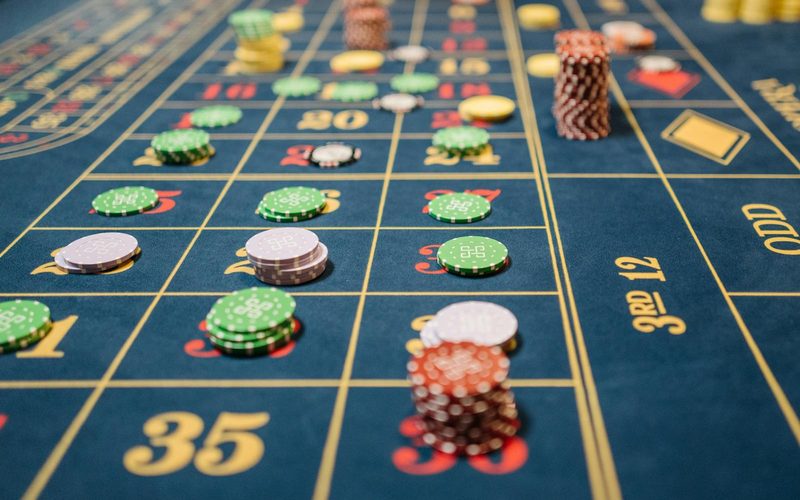
Top Picks Summary: Best Roulette Odds for Players
Based on the ranking criteria above, here are our top picks for roulette odds in 2025–2026:
- French Roulette (single zero with La Partage): The best odds for even-money bets, with a house edge of just 1.35%. Ideal for players who prefer red/black, odd/even, or high/low bets.
- European Roulette (single zero): The standard for most online and land-based casinos. House edge of 2.70% across all bets. Best for players who want a balanced mix of inside and outside bets.
- American Roulette (double zero): Avoid unless you have a specific strategy that accounts for the 5.26% house edge. Some casinos offer "surrender" rules on even-money bets, reducing the edge to 2.63% on those bets.
- Live Dealer Roulette: Offers the same odds as standard European or French roulette but with the added transparency of a real wheel and dealer. Check the specific variant before playing.
For players seeking the best long-term value, French roulette with La Partage is the clear winner. For those who enjoy inside bets, European roulette remains the most widely available and favourable option.
Methodology: How We Analyze Roulette Odds
Our analysis of roulette odds follows a rigorous methodology based on established probability theory and historical data. We calculate the exact house edge for each bet type using the formula: House Edge = (True Odds - Payout Odds) / True Odds. For European roulette, the true odds of a straight-up bet are 36:1 (37 total outcomes, 1 winning, 36 losing), but the payout is 35:1, resulting in a house edge of (36-35)/36 = 2.70%.
We also consider the impact of special rules (e.g., La Partage, En Prison, surrender) and verify that casinos adhere to standard payout tables. Our methodology is transparent and based on the mathematical principles established by Cardano and expanded by Pascal and Fermat. For a deeper dive into the mathematics, visit our home page for a full guide to probability in gambling, or explore our reviews section for casino-specific payout tables.
Frequently Asked Questions About Roulette Odds
What is the difference between odds and probability in roulette?
Probability expresses the likelihood of an outcome as a ratio of favorable outcomes to total outcomes. For example, the probability of winning a straight-up bet in European roulette is 1/37 (≈2.70%). Odds express the ratio of favorable to unfavorable outcomes: 1:36 for the same bet. Odds are used to calculate payouts, while probability is used for expected value calculations.
Why does American roulette have worse odds than European roulette?
American roulette has an extra pocket (00) on the wheel, increasing the total number of pockets from 37 to 38. This changes the true odds for every bet. For a straight-up bet, the true odds are 37:1 (American) vs. 36:1 (European), but the payout remains 35:1. The house edge jumps from 2.70% (European) to 5.26% (American) because the casino pays out as if there are only 36 pockets, but there are actually 38.
What are the best odds for even-money bets in roulette?
The best odds for even-money bets (red/black, odd/even, high/low) are found in French roulette with the La Partage rule. This rule returns half your stake if the ball lands on zero, reducing the house edge to 1.35% on those bets. Without La Partage, the house edge is 2.70% in European roulette and 5.26% in American roulette.
How do I calculate the payout for a roulette bet?
Payout is calculated by multiplying your stake by the payout ratio. For a straight-up bet (35:1 odds), a £10 bet returns £350 profit plus your £10 stake, for a total of £360. For a split bet (17:1), a £10 bet returns £170 profit plus £10 stake. The payout ratio is fixed for each bet type and does not change between European and American roulette, even though the true odds differ.
Can I improve my roulette odds with a betting system?
No. Betting systems like Martingale, Fibonacci, or Labouchère cannot change the underlying odds or house edge. They only alter the size and pattern of your bets. While they may create short-term wins or losses, the house edge remains constant over time. The only way to improve your odds is to choose a variant with a lower house edge (e.g., French roulette with La Partage).
What is the house edge on a single number bet in European roulette?
The house edge on a single number (straight-up) bet in European roulette is 2.70%. This is calculated as: (True odds of 36:1 minus payout odds of 35:1) divided by true odds of 36:1. The casino's advantage comes from the zero pocket, which is not included in the payout calculation.
Why are roulette odds expressed differently in different countries?
Different odds formats developed historically. Fractional odds (e.g., 35/1) originated in Britain between the 18th and 19th centuries. Decimal odds (e.g., 36.0) became popular in Europe and Asia. Moneyline odds (e.g., +3500) are used in the United States. All formats represent the same mathematical relationship, just expressed differently. Most modern online casinos display odds in multiple formats.
Does the "en prison" rule affect roulette odds?
Yes. The En Prison rule (common in French roulette) allows even-money bets to remain on the table for another spin if the ball lands on zero, rather than losing immediately. If the next spin wins, you get your original stake back (no profit). This rule reduces the house edge on even-money bets from 2.70% to approximately 1.35%, making French roulette the most favourable variant for those bets.
What is the probability of winning a dozen bet in roulette?
A dozen bet (covering numbers 1–12, 13–24, or 25–36) covers 12 numbers. In European roulette (37 pockets), the probability of winning is 12/37 ≈ 32.43%. The payout is 2:1 (you win 2 units for every 1 unit wagered). In American roulette (38 pockets), the probability is 12/38 ≈ 31.58%, with the same 2:1 payout, resulting in a higher house edge.
How do I find the best roulette odds at online casinos?
Look for casinos that offer European or French roulette with La Partage or En Prison rules. Check the payout table to ensure it matches standard odds (35:1 for straight-up, 17:1 for split, etc.). Verify the casino's licensing and regulation to ensure fair play. For a curated list of trusted casinos with the best odds, visit our reviews section. Always gamble responsibly and set limits before you play. For more information, see our responsible gambling page and calendar hub for upcoming promotions and events.